
Inquiry Now
Infusion Drop Rate Calculation: Key Knowledge for Safeguarding Infusion Safety
Time : 24/11/2025
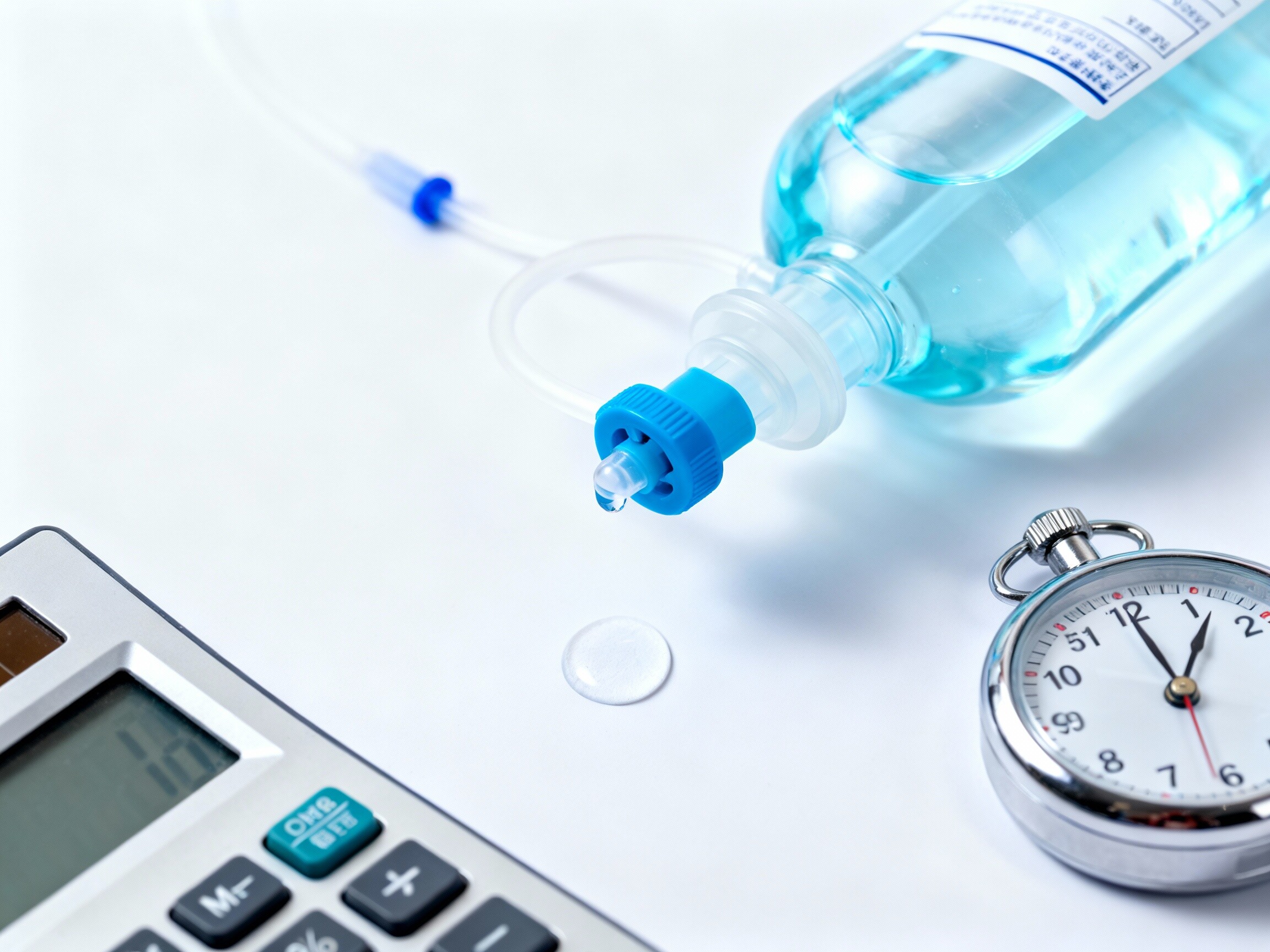
Infusion Drop Rate Calculation: Key Knowledge for Safeguarding Infusion Safety
In clinical medical settings, the precise control of infusion drop rate is a crucial link in ensuring treatment safety. This process requires comprehensive consideration of core parameters such as the drip factor of the infusion set, hourly infusion volume, drops per minute, estimated infusion duration, while strictly adhering to the drop rate specifications for special medications. Proficiency in this professional knowledge not only builds a solid safety barrier for infusion therapy but also directly contributes to the patient's recovery process.
I. Basic Parameters: Core Basis for Infusion Calculation
The calculation of infusion drop rate does not proceed arbitrarily; it relies on several key basic parameters. Accurately grasping the definitions and characteristics of these parameters is a prerequisite for subsequent calculations.
1. Drip Factor of Infusion Set
The drip factor is a core indicator for measuring the performance of an infusion set, specifically referring to the number of drops formed per milliliter of medicinal solution when passing through the infusion set. It serves as the foundation for all infusion drop rate calculations. Clinically, commonly used infusion sets have different drip factors, with the most prevalent specifications being 10 drops/mL, 15 drops/mL, and 20 drops/mL. The selection of different specifications depends on the treatment requirements.
2. Milliliters per Hour (mL/h)
The setting of hourly medicinal solution infusion volume is not a one-size-fits-all standard; it is a comprehensive judgment made by medical staff based on the patient's specific condition, physical function status, and the inherent properties of the medication. For instance, for patients requiring emergency fluid replacement due to severe dehydration, shock, etc., the hourly infusion volume will be appropriately increased to quickly correct fluid imbalance. However, for special populations such as those with heart failure or renal failure, the hourly infusion volume must be strictly limited within a safe range to avoid increasing organ burden.
II. Core Formulas: Practical Methods for Accurate Calculation
In clinical practice, medical staff use standardized formulas to calculate the drop rate and infusion duration. These formulas are concise and practical, serving as important tools to ensure infusion accuracy.
1. Calculation of Drops per Minute (dpm)
Drops per minute is the most frequently monitored indicator during infusion. Its calculation formula is: Drops per minute = (Milliliters per hour × Drip factor) ÷ 60. For a specific example, if a standard infusion set with a drip factor of 15 drops/mL is used, and the medical order requires an infusion volume of 120 mL per hour, the drops per minute calculated by the formula would be (120 × 15) ÷ 60 = 30 drops.
2. Calculation of Infusion Duration
Accurately estimating the infusion duration not only helps medical staff arrange the treatment process reasonably but also allows patients to plan their time in advance. The basic calculation formula is: Infusion duration (hours) = Total fluid volume (mL) ÷ Milliliters per hour. If the total fluid volume and drops per minute are known, the infusion duration can also be calculated using a derived formula: Infusion duration (minutes) = Total fluid volume (mL) × Drip factor ÷ Drops per minute. For example, if a patient needs to receive 500 mL of medicinal solution using an infusion set with a drip factor of 15 drops/mL, and the set drops per minute is 40, the total infusion duration would be 500 × 15 ÷ 40 = 187.5 minutes, which converts to 3 hours, 7 minutes, and 30 seconds.
III. Special Medications: Top Priority in Drop Rate Control
Different medications have distinct pharmacological effects, leading to significant differences in their requirements for infusion drop rate. Particularly for some special medications, excessively fast drop rates may directly cause severe adverse reactions and even threaten life. Therefore, the drop rate must be strictly controlled in accordance with medical orders. The following are the drop rate requirements for several typical types of medications:
- Vasoactive Medications: Taking sodium nitroprusside as an example, as a potent vasodilator, its drop rate control is extremely strict. The initial dose is usually 0.5–1 μg/(kg·min), and it needs to be adjusted gradually based on changes in the patient's blood pressure. An excessively fast drop rate may cause a sharp drop in blood pressure within a short period and may also lead to severe complications such as cyanide poisoning.
- Electrolyte Medications: Potassium chloride solution is a commonly used electrolyte supplement in clinical practice, but it has strict requirements for drop rate. When the solution concentration is ≤ 0.3%, the drop rate should be controlled within 60 drops per minute. An excessively fast drop rate will not only cause severe pain at the puncture site but may also lead to hyperkalemia, which in turn induces life-threatening risks such as arrhythmia.
- Antibiotic Medications: Penicillin-type medications require controlled infusion speed, and for adults, they are usually required to be infused within 30–60 minutes. An excessively fast drop rate will not only increase the irritation of the medication to blood vessels but may also raise the probability of allergic reactions. In addition, special antibiotics such as vancomycin also have strict drop rate requirements; each infusion should last no less than 60 minutes, otherwise, adverse reactions such as red man syndrome and kidney damage may occur.
- Nutritional Preparation Medications: Fat emulsion, as a commonly used parenteral nutrition preparation, requires a gradual increase in infusion speed. The initial speed is 1 mL/(kg·h), and it can be gradually increased to 2 mL/(kg·h) after the patient adapts. An excessively fast drop rate may easily cause patients to experience discomfort such as hyperlipidemia, nausea, and vomiting.
IV. Safety Tips: Important Notes During Infusion
Mastering the knowledge of infusion drop rate calculation can help patients and their family members better understand the treatment process and enhance the sense of reassurance during medical treatment, but this does not mean that the drop rate can be adjusted independently. In the actual infusion process, the following principles must be strictly followed: First, all settings and adjustments of the drop rate must be performed by professional medical staff, who will make comprehensive judgments based on the patient's individual conditions (such as age, weight, liver and kidney function, vascular conditions, etc.). Second, for children, the elderly, and patients with cardiovascular and cerebrovascular diseases, the drop rate should usually be controlled at 20–40 drops per minute (except for special medications); do not adjust it to be faster out of eagerness to finish the infusion. Finally, if discomfort such as palpitations, chest tightness, dizziness, or pain and swelling at the puncture site occurs during the infusion, medical staff should be called immediately for professional handling, and no unauthorized operations should be performed.
In conclusion, infusion drop rate calculation is basic yet important knowledge in clinical medicine. Precisely controlling the drop rate is the key to ensuring the safety and effectiveness of treatment. Both medical staff and patients, as well as their family members, should attach great importance to this link and jointly safeguard the safety of infusion therapy.
Previous page:Already the first
Next page:Already the last
Leave A Message
If you are interested in our products and want to know more details, please leave a message here, we will reply you as soon as we can.